
Engagement at a glance
Client
Trend Group
Industry
Manufacturing
Website
granitetransformations.com
Executive summary
Trend Group is a U.S.-based custom cabinet manufacturer serving multiple franchise locations. Its products require a high degree of configuration across cabinet styles, colors, dimensions, laminates, pricing rules, and manufacturing specifications. HubSpot supported the sales process, but cabinet ordering and production depended on a separate Microsoft Access application containing years of embedded and largely undocumented VBA logic.
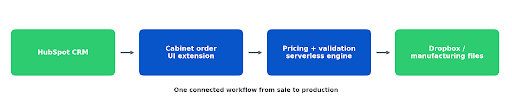
Inboundsys replaced this disconnected model with a native, deal-based cabinet ordering application inside HubSpot. The solution combined HubSpot UI Extensions, React.js, Custom Objects, HubDB, Node.js serverless functions, REST APIs, and automated JSON/PDF manufacturing-file generation. The result was one cloud-based workflow linking sales, ordering, validation, and production.
At a glance
| Business need | Remove duplicate entry and manual handoffs between HubSpot CRM and the legacy ordering application. |
| Core solution | A native HubSpot cabinet-ordering experience built around deals, cabinet orders, openings, pricing, and manufacturing validations. |
| Migration | Product data migrated from Microsoft Access; the source form does not state a record count. |
| Integrations | Dropbox and QuickBooks were listed as the main connected systems; Dropbox API supported downstream file handling. |
| Business outcome | A centralized, scalable platform with improved accuracy, visibility, adoption, forecasting, productivity, and customer experience. |
| Metrics status | Exact metrics were marked “Partially” available; no numerical result values were supplied. |
Why this case study matters
It transformed a business-critical legacy application rather than simply configuring standard CRM fields.
It preserved complex pricing and manufacturing behavior through disciplined reverse engineering.
It embedded the ordering experience in HubSpot, giving users one operational workspace.
It created a scalable foundation for multi-location franchise operations and business-managed configurations.
| Area | Before modernization |
| Sales management | HubSpot CRM was already used for customer and sales activity. |
| Ordering | A legacy Microsoft Access application-controlled cabinet ordering. |
| Logic | VBA code and database structures held pricing, product relationships, and manufacturing rules. |
| Production handoff | Files and information moved through manual steps, limiting end-to-end traceability. |
| Operating model | Multiple franchise locations needed a repeatable, maintainable ordering process. |
The client and operational context
Trend Group’s custom cabinetry workflow is inherently complex. Each order can involve numerous dependent choices, including product style, color, dimensions, laminate selections, and manufacturing specifications. These are not isolated data points: product relationships, pricing rules, and production validations must remain consistent throughout the order lifecycle.
The starting environment
Challenges reported by the client
No centralized CRM and customer data spread across multiple systems
Manual lead follow-up and limited marketing automation
Poor sales visibility, forecasting, and reporting
No standardized sales process and low CRM adoption
Duplicate data entry between HubSpot and the ordering system
Pricing and order-error risk caused by manual work
Undocumented legacy logic that was difficult to maintain and scale
Manual manufacturing handoffs and limited operational visibility
The central problem
The core issue was not only that Microsoft Access was old. It was that the application operated separately from HubSpot and contained critical institutional knowledge. Replacing it required Inboundsys to understand and faithfully recreate the rules that protected pricing accuracy, valid product combinations, and manufacturing readiness, while making the new experience easier for users and scalable for the business.
Objectives and solution strategy
Trend Group wanted a unified platform capable of supporting immediate operational efficiency and long-term growth. The project objectives covered customer data, sales execution, service, reporting, marketing, finance, leadership visibility, IT maintainability, and operational scale.
Business objectives
| Sales effectiveness Centralize customer data; improve lead management; increase sales productivity; standardize sales processes. |
Visibility & control Improve reporting, dashboards, forecasting, and leadership visibility. |
| Automation & service Automate marketing; improve customer service; reduce manual work. |
Adoption & growth Improve user adoption; support business growth with scalable processes. |
HubSpot footprint
The source form identifies an Enterprise implementation spanning Marketing Hub, Sales Hub, Service Hub, Content Hub, Data Hub / Operations Hub, Commerce Hub, and Smart CRM. Covered departments included Marketing, Sales, Customer Success, Operations, Finance, Leadership, and IT.
Primary deliverables
Users, teams, and permissions
Custom properties and Custom Objects
Lifecycle stages, lead status, and sales pipelines
Forms, landing pages, workflows, and automation
Knowledge base and customer portal
Products, quotes, and payments
Custom cabinet ordering system using HubSpot UI Extensions
Solution principle: Keep the user in HubSpot while moving complex rules into a maintainable, testable service layer.
The native HubSpot cabinet ordering application
The centerpiece of the implementation was a deal-based cabinet ordering application embedded directly in the HubSpot CRM record experience. Instead of switching between systems, users could manage cabinet orders and their related openings from the deal context.
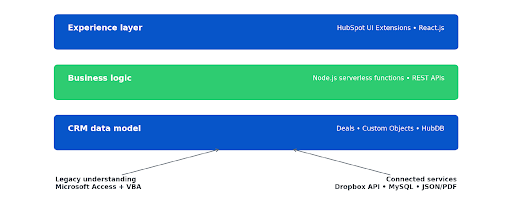
Figure 1. Lead volumes reported for Home Sleep Test and CPAP campaigns.
How the solution worked
HubSpot UI Extensions delivered the in-CRM ordering interface.
React.js supported a responsive and interactive user experience.
Custom Objects represented cabinet-order entities and openings in a structured CRM data model.
HubDB supported business-managed configuration data where appropriate.
Node.js serverless functions executed complex pricing and validation logic.
REST APIs connected HubSpot with supporting systems and services.
JSON and PDF manufacturing files were generated automatically for downstream production use.
Configuration that created the most value
Inboundsys recreated the cabinet ordering and pricing engine as a native HubSpot capability. The team designed the custom data model, connected it to deals, implemented pricing and validation rules, and automated manufacturing-file generation. This brought the sales-to-production workflow into a common system of record while retaining the specialist logic required by manufacturing
Reverse-engineering the legacy system
The biggest project challenge was the Microsoft Access application itself. Years of undocumented business logic had accumulated across forms, VBA code, tables, queries, and relationships. Rules that appeared simple at the user-interface level could depend on hidden product relationships, pricing conditions, or manufacturing validations.
Inboundsys response
| 1. Inspect | Reviewed existing Access forms, VBA code, database structures, and user behavior. |
| 2. Map | Documented product relationships, pricing paths, validations, and manufacturing dependencies. |
| 3. Model | Translated legacy entities into HubSpot deals, Custom Objects, properties, and configuration data. |
| 4. Rebuild | Implemented the application in React.js and HubSpot UI Extensions, with Node.js serverless logic. |
| 5. Validate | Tested behavior for functional parity, data accuracy, pricing, and production readiness. |
| 6. Launch | Completed user acceptance testing, training, go-live support, and post-launch support. |
Challenges managed during delivery
Complex requirements and changing scope
HubSpot API limitations
Legacy-system limitations
A tight implementation timeline
The critical success factor was functional parity without carrying forward the legacy system’s maintenance burden. Inboundsys preserved required business behavior but relocated it into a scalable cloud architecture with a structured CRM data model and modern development stack.
Data migration, integrations, and automation
Data migration
The project included migration of product data from Microsoft Access into the new environment. The source form does not provide an approximate record count, so this case study does not state one. Migration was part of a broader effort to make product information usable by the ordering application and its validation rules.
Connected systems
| System | Role in the solution |
|---|---|
| Dropbox | Listed as a main integration and supported through the Dropbox API for downstream file handling and manufacturing workflows. |
| QuickBooks | Listed in the source form as a main system integrated with HubSpot. |
| Microsoft Access | Analyzed as the legacy source system and used for product-data migration and rule discovery. |
| MySQL | Included in the technology stack supporting the modernized solution. |
| HubSpot | The central platform for CRM, ordering, automation, reporting, and user workflows. |
Automation approach
The source form identifies custom-coded automation as the principal automation type. Its most visible expression was the movement from configured cabinet order to validated manufacturing output: serverless code applied business rules, checked data, and produced JSON/PDF files for downstream use.
Operational improvement
Reduced repeated entry between sales and ordering tools.
Applied pricing and manufacturing validations consistently.
Improved production-ready information and created a clearer audit trail across the deal, order, and manufacturing handoff.
Delivery approach and governance
Inboundsys delivered the engagement through a complete implementation lifecycle rather than a code-only build. The project moved from discovery to ongoing stabilization, allowing business rules to be understood, converted, tested, and adopted in a controlled sequence.
Activities completed
| Discovery workshops | Process mapping | Solution architecture |
| HubSpot configuration | Data migration | Integration development |
| Testing | User acceptance testing | Training |
| Go-live support | Post-launch support |
Training and adoption
Training was completed, but the source form does not state the number of sessions or users trained. Adoption was supported through an embedded HubSpot experience: users could perform ordering work where they already managed deals, reducing context switching and making the CRM more operationally relevant.
Departments enabled
Marketing
Sales
Customer Success
Operations
Finance
Leadership
IT
Results and business impact
The modernized solution centralized customer, sales, ordering, and manufacturing processes in HubSpot. It eliminated key manual steps, increased order accuracy through automated pricing and validation, streamlined manufacturing workflows, and created a scalable foundation for franchise operations.
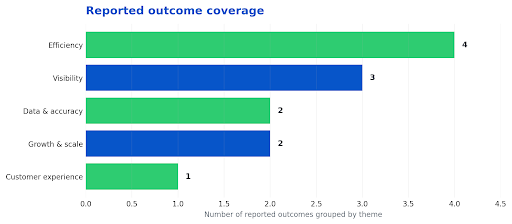
Chart note: Counts represent the 12 reported outcome statements in the supplied form, grouped by Inboundsys into five themes. They are not performance percentages
Reported results
| Efficiency | Reduced manual work; improved productivity; faster lead response; reduced operating costs. |
| Visibility | Better sales visibility; improved forecasting; improved reporting. |
| Data & accuracy | Centralized customer data; improved data accuracy. |
| Growth & scale | Higher lead conversion; more scalable processes. |
| Experience | Better customer experience. |
MOST IMPORTANT OUTCOME
Trend Group gained a cloud-based operational platform that unifies the CRM and cabinet-ordering process. Sales teams can work from HubSpot, business rules are enforced by the application, and manufacturing receives more consistent output, without depending on a separate, difficult-to-maintain Access application.
LONG-TERM VALUE AND CONCLUSION
A stronger operating foundation
The implementation created long-term value by converting fragile, undocumented desktop logic into a structured cloud solution. HubSpot became more than a sales database: it became the operational workspace connecting customer records, deal progress, cabinet configuration, pricing, validation, and manufacturing outputs.
Long-term value drivers
Scalability: A cloud-based architecture can support growing franchise operations more effectively than a standalone Access application.
Maintainability: Modern React.js, Node.js, APIs, Custom Objects, and HubDB make the solution easier to extend and govern.
Data quality: Centralized records and automated validations reduce inconsistency and production risk.
User adoption: Embedding ordering in the CRM gives users a practical reason to keep HubSpot current.
Business visibility: Leadership and operational teams gain a more connected view of sales, orders, forecasting, and production progress.
Configuration agility: Business-managed configurations can evolve without rebuilding the entire application.
Technology stack
HubSpot CRM • HubSpot UI Extensions • React.js • Node.js Serverless Functions • HubSpot Custom Objects • HubDB • REST APIs • Microsoft Access/VBA analysis • MySQL • Dropbox API • JSON/PDF manufacturing-file generation
Conclusion
This engagement demonstrates how a complex legacy application can be modernized without losing the business logic that makes it valuable. Inboundsys combined reverse engineering, CRM architecture, custom application development, migration, integration, testing, and adoption support to recreate a critical cabinet-ordering engine inside HubSpot. The completed platform now supports a connected sales-to-manufacturing journey, better accuracy, stronger visibility, and a scalable path for future growth.
PROJECT STATUS: COMPLETED | CLIENT PUBLICATION APPROVAL: YES | NDA/CONFIDENTIALITY RESTRICTIONS: YES