
Engagement at a glance
Client
BeatRoute Innovations Private Limited
Industry
Technology, information, and internet
Engagement
Dual-hub onboarding, CRM migration, automation, reporting, and enablement
Platform
HubSpot Marketing Hub + Sales Hub Professional
Executive summary
Growing technology companies often reach a point where marketing activity expands faster than the systems supporting it. Campaigns, landing pages, customer histories, sales follow-up, and management reporting begin to live in separate places. Teams can still operate, but they spend more time assembling context, checking data, and coordinating handoffs. The result is slower execution and an incomplete view of the customer journey.
BeatRoute, a sales enablement platform for retail businesses, faced this challenge while scaling its marketing and sales operations. ActiveCampaign supported parts of the existing marketing environment, but BeatRoute wanted marketing and sales activity within one connected platform. Its teams needed better access to prospect information, clearer engagement tracking, easier landing-page creation, more useful reporting, and automation that could reduce repetitive work.
BeatRoute engaged Inboundsys for HubSpot Marketing Hub Professional and Sales Hub Professional onboarding, together with an ActiveCampaign-to-HubSpot migration. The engagement combined data migration, CRM configuration, technical setup, marketing enablement, sales enablement, workflow automation, dashboards, training, and post-setup handholding.
The resulting HubSpot environment gave BeatRoute a centralized foundation for contacts, companies, deals, activities, campaigns, and reporting. Marketing could create and measure campaigns more efficiently. Sales gained clearer customer context and structured tools for follow-up. Automated deal creation, property updates, lead assignment, and task workflows reduced manual coordination. HubSpot reporting became a shared source of insight, while integrated landing pages improved the team's ability to capture and understand digital engagement.
About BeatRoute
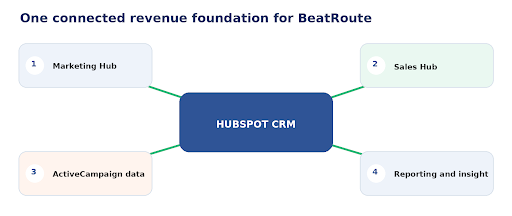
Figure 1. HubSpot connects BeatRoute's migrated data, marketing activity, sales execution, and reporting.
BeatRoute provides a sales enablement platform designed to help retail businesses generate higher revenue through their sales teams, distributors, customers, and channel ecosystem. The platform goes beyond basic sales and distribution digitization by helping organizations align field execution with business goals and strengthen collaboration among sales representatives, distributors, customers, and channel influencers.
Operating in the technology, information, and internet sector, BeatRoute serves organizations that need disciplined sales execution across complex retail networks. Its own growth therefore depended on a similarly disciplined go-to-market foundation: marketing needed to attract and convert the right audiences, sales needed reliable context for personalized conversations, and leadership needed data that could be interpreted without assembling reports manually.
As activity increased, the limitations of disconnected marketing and sales processes became more visible. BeatRoute needed a platform capable of supporting inbound marketing, sales productivity, customer history, automation, and performance reporting as one coordinated system.
The Business Challenge
| # | Challenge | Business effect | Design response |
|---|---|---|---|
| 01 | Incomplete context | Prospect and engagement information was difficult to assemble | Unified customer record |
| 02 | Tracking complexity | Teams lacked a clear view of contact progress and next actions | Lifecycle and pipeline structure |
| 03 | Landing-page dependency | Campaign pages required recurring development and design support | Hubspot page and form enablement |
| 04 | Limited analysis | Marketing and sales insight was fragmented across processes | Shared dashboards and reporting |
Before HubSpot, BeatRoute's sales and marketing teams depended on manual data collection and fragmented context. This created friction at precisely the moments when fast, informed action mattered most.
Sales challenges
Incomplete prospect context: Sales representatives did not always have the client information, engagement details, and analytical context required for personalized conversations.
Complex engagement tracking: It was difficult to understand where an individual contact stood, which interactions had already occurred, and what action should happen next.
Limited preparation visibility: Marketing activity was not always easy for sales to access before discovery or demonstration calls, making it harder to understand a prospect's interests.
Manual follow-up coordination: When data and next steps are maintained across separate tools or individual working methods, consistent follow-up becomes harder to scale.
Marketing challenges
Difficult quantitative assessment: The marketing team needed a clearer way to interpret user behavior, campaign activity, and conversion performance.
Developer-dependent landing pages: Creating landing pages required ongoing design and development support, slowing campaign launches and experimentation.
Conversion-rate pressure: BeatRoute wanted its landing pages to turn more visitors into leads and needed better visibility into how forms and content performed.
Disconnected systems: Keeping marketing activity and sales execution in different environments made it harder to build a continuous lifecycle from first interaction to sales engagement.
These challenges were connected. Better landing pages alone would not solve limited sales context. A CRM migration alone would not automatically create consistent processes. BeatRoute needed an onboarding program that combined data, platform architecture, user enablement, automation, and measurement.
Project Objectives
The engagement was organized around six practical objectives:
Move relevant ActiveCampaign contact data and interaction history into HubSpot.
Configure HubSpot as a shared foundation for marketing and sales teams.
Enable faster landing-page, form, email, social, campaign, and content execution.
Give sales representatives structured tools for prospecting, pipeline management, meetings, sequences, documents, and follow-up.
Automate repeatable activities such as deal creation, property updates, lead rotation, tasks, and nurturing.
Establish dashboards and reports that support campaign analysis, sales visibility, and informed decisions.
Discovery and Onboarding Architecture
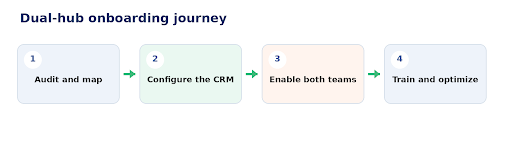
Figure 2. The onboarding sequence connected discovery, CRM architecture, team enablement, and adoption.
Inboundsys began by reviewing BeatRoute's existing processes and the way information moved between ActiveCampaign, website touchpoints, marketing activity, and sales follow-up. This audit-oriented approach was important because onboarding is not simply a checklist of portal settings. Configuration decisions affect lifecycle stages, properties, lists, forms, workflows, attribution, ownership, and reporting.
The team translated the operating requirements into a phased onboarding plan covering account setup, CRM structure, technical connections, Marketing Hub, Sales Hub, automation, reporting, training, and adoption support.
The onboarding architecture followed four principles:
Centralize the customer record: Contacts, companies, deals, and relevant engagement history needed to work together inside HubSpot.
Design for both teams: Marketing and sales required different working views, but those views needed to share definitions and lifecycle context.
Automate repeatable work: HubSpot workflows would handle predictable updates and assignments while users focused on decisions and conversations.
Make insight operational: Dashboards and reports needed to help teams act, not merely display activity.
ActiveCampaign-to-HubSpot Migration
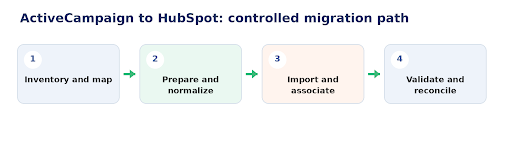
Figure 3. A controlled migration path protected data usability and customer context.
The migration was the foundation of the engagement. Moving from ActiveCampaign to HubSpot meant more than exporting a contact list and importing it into a new portal. The usefulness of the new system depended on how accurately the existing information was mapped, transferred, and connected to the new CRM structure.
Inboundsys prepared the migration around the following steps:
Review and inventory: Identify relevant contact fields, lists, engagement information, and dependencies in ActiveCampaign.
Map the target model: Align source fields with HubSpot contacts, companies, deals, properties, lifecycle stages, and segmentation requirements.
Prepare and normalize: Review formats, naming, duplicates, and values so migrated information would support reliable filtering and reporting.
Import and associate: Bring agreed data and interactions into HubSpot and connect records to the structures required by marketing and sales.
Validate and reconcile: Check field values, record counts, segmentation logic, and usability before teams relied on the new platform.
The migration created a centralized database for contacts, leads, and customers and gave BeatRoute a more unified view of interactions and history. This context was essential for personalized communication, more informed sales conversations, and coordinated lifecycle management.
Marketing Hub Professional Onboarding
| Capability | Onboarding coverage |
|---|---|
| CRM foundation | Users, teams, permissions, contacts, companies, deals, properties, lists, filters, and lifecycle structure |
| Technical setup | Tracking, domains, forms, advertising, social connections, inbox, chat, bots, and routing where applicable |
| Marketing hub | Email, landing pages, social, ads, blogging, campaigns, segmentation, and campaign reporting |
| Sales hub | Pipelines, leads, templates, snippets, sequences, documents, meetings, products, quotes, email, and call logging |
| Automation | Form follow-up, nurturing, deal creation, property updates, lead rotation, tasks, and ticket routing |
| Reporting | Dashboards, custom reports, attribution, email health, and sales analytics |
Marketing Hub onboarding focused on helping BeatRoute execute, measure, and improve inbound activity directly inside HubSpot.
Technical and channel foundation
The agreed setup covered HubSpot tracking, website forms, relevant subdomains, the email-sending domain, advertising connections, and social accounts where applicable. These elements established the technical foundation required for attribution, contact capture, campaign execution, and consistent brand communication.
Segmentation and contact management
Active and static lists were structured to help the team group contacts according to relevant properties and behaviors. Custom saved filters gave users faster access to the records most relevant to their immediate work. Together, properties, lists, and filters created a manageable segmentation layer for targeting and analysis.
Email, campaigns, social, and content
The onboarding included email templates and guidance for using HubSpot's marketing tools. BeatRoute's team received a foundation for social monitoring and publishing, advertising oversight, campaigns, campaign reporting, and blogging best practices. Blog listing and template requirements were also included in the onboarding scope.
Landing-page enablement
Landing pages were a particularly important part of the engagement. Before HubSpot, campaign-page creation depended heavily on developers and designers. Inboundsys helped BeatRoute translate design requirements into HubSpot landing pages that could be launched, integrated with forms, and measured within the same environment as the surrounding campaign.
This shift improved more than production speed. Each page became part of a connected measurement system. Form submissions, known-contact behavior, campaign membership, and later sales activity could be understood together rather than as isolated website events.
Sales Hub Professional Onboarding
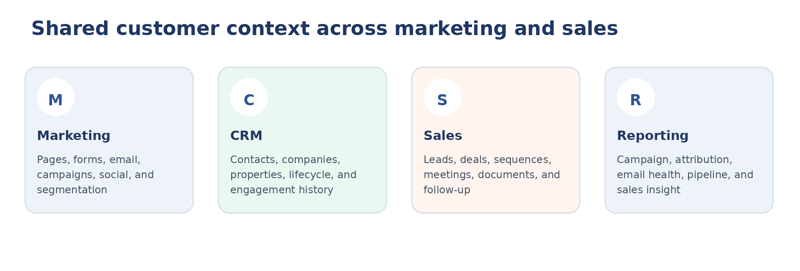
Figure 4. Marketing, CRM, sales, and reporting operate from connected customer context.
Sales Hub onboarding established the processes and tools required for more structured prospecting and follow-up.
BeatRoute's sales environment included configuration and enablement across:
Users, teams, roles, and permissions to give people appropriate access.
Contact, company, and deal records supported by relevant custom properties.
Deal pipelines and stages for consistent opportunity progression.
Leads and lead stages to organize prospecting activity.
Email and call logging to preserve engagement context.
Templates, snippets, sequences, and documents to improve representative productivity.
Meetings to streamline scheduling and capture engagement.
Products and quote guidance to support commercial conversations.
The value of these tools came from their connection to the same customer record used by marketing. Sales representatives could review digital activity and campaign context before conversations, while marketing could understand how captured leads moved into sales engagement.
Automation and Connected Revenue Workflows
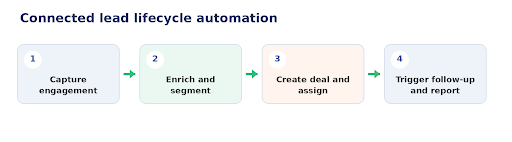
Figure 5. Workflow automation connects engagement capture with ownership, follow-up, and insight.
Automation helped convert the configured portal into an operating system. Inboundsys worked with BeatRoute to define workflows for repeatable activities, including deal creation and property setup for new customers. This allowed sales users to focus on opportunities requiring tailored attention while predictable self-sign-up activity could be processed consistently in the background.
The wider workflow scope included:
Post-form-submission actions and internal follow-up.
Lead-nurturing sequences based on lifecycle requirements.
Automated deal creation and record-property updates.
Lead rotation and ownership assignment.
Task creation and reminders for timely action.
Ticket creation and routing where relevant.
These workflows reduced dependence on memory and manual coordination. More importantly, they reinforced shared process definitions. A workflow is most useful when it does not merely save clicks but also ensures that the right data is captured and the next action is consistently triggered.
Reporting, Dashboards, and Conversion Insight
BeatRoute adopted HubSpot reporting as a central source of marketing and sales insight. The onboarding scope included dashboards, custom reports, attribution reporting, email health reporting, and sales analytics.
This reporting foundation helped teams move from fragmented observations toward a shared interpretation of performance. Marketing could evaluate campaign and landing-page activity. Sales could review pipeline and engagement information. Leadership could examine activity using common CRM data rather than separately assembled reports.
Landing-page conversion was a priority. The project enabled BeatRoute to launch multiple pages within HubSpot and track interactions more precisely. The existing case study records improved conversion-rate performance, particularly when a visitor was already known in the database. HubSpot's form-prefill capability reduced repeated data entry for returning contacts, creating a smoother experience for registrations and content requests.
MEASUREMENT NOTE
The source material does not provide numerical before-and-after conversion rates. The result is therefore presented as a verified directional improvement rather than a percentage claim.
Training, Adoption, and Handholding
A technically correct portal only creates value when teams understand how to use it. The project plan included three to four CRM training sessions for the extended team, dedicated marketing and sales setup training, and up to 30 days of handholding after configuration.
Training connected features to practical work: how records should be maintained, how marketing assets should be created, how sales activity should be logged, how workflows affect users, and how dashboards should be interpreted. Post-setup handholding gave BeatRoute a structured period for clarification and adjustment as users began working in the new environment.
Business Results
| Outcome area | Verified operational improvement |
|---|---|
| Platform | Marketing hub and sales hub professional onboarded as one coordinated environment |
| Migration | ActiveCampaign data and relevant interactions moved into HubSpot for a more unified customer view |
| Marketing | Multiple HubSpot landing pages launched with connected forms, campaign context, and contact tracking |
| Sales | Representatives gained structured pipelines, productivity tools, and clearer engagement context |
| Automation | Deal creation, property updates, nurturing, assignments, and tasks gained workflow support |
| Insight | Hubspot reporting established a shared source for marketing, attribution, email, and sales analysis |
| Adoption | Training sessions and post-setup handholding supported practical user adoption |
The engagement produced a connected HubSpot foundation spanning migration, marketing execution, sales enablement, automation, and reporting.
ActiveCampaign data and relevant interactions were moved into HubSpot to support a unified customer view.
Marketing Hub and Sales Hub Professional were onboarded as one coordinated platform.
Multiple HubSpot landing pages were launched and connected to forms, campaign activity, and contact records.
Known-contact form prefilling helped create a smoother conversion experience for returning visitors.
Deal creation, property updates, nurturing, assignments, and tasks gained workflow support.
Sales users received clearer access to marketing context and engagement history.
HubSpot reporting became a shared source for campaign, email, attribution, and sales analysis.
Training and post-setup support helped teams adopt the new processes.
The most important result was structural. BeatRoute moved from a separated marketing platform and manual coordination toward a shared revenue environment. Marketing execution, customer data, sales activity, automation, and reporting could now reinforce one another.
Long-Term Business Value
The long-term value of the onboarding lies in the operating model created around HubSpot. New campaigns and landing pages can use the same data foundation as sales follow-up. New workflows can build on established properties and lifecycle stages. Reporting can connect activity across the funnel instead of stopping at an isolated conversion event.
This foundation gives BeatRoute several continuing advantages:
Greater campaign agility: Marketing can create and measure assets with less dependence on disconnected production processes.
More informed sales conversations: Representatives can use engagement context to prepare for calls and tailor follow-up.
Repeatable execution: Workflows reinforce agreed processes as activity grows.
Better data continuity: A shared record reduces the risk of losing context between marketing and sales.
Extensible reporting: Dashboards and custom reports can evolve as management questions change.
Scalable onboarding: New users can be introduced to documented tools, views, and processes rather than individual workarounds.
Technology Stack
HubSpot Marketing Hub Professional
HubSpot Sales Hub Professional
HubSpot CRM
HubSpot landing pages, forms, email, campaigns, social, and reporting
HubSpot sales tools, pipelines, leads, sequences, meetings, products, and quotes
HubSpot workflows and automation
ActiveCampaign as the legacy migration source
Website tracking, forms, and connected marketing domains
Why Inboundsys
BeatRoute needed more than a software walkthrough. The engagement required migration planning, CRM architecture, marketing and sales process configuration, landing-page implementation, automation, reporting, training, and ongoing expert guidance.
Inboundsys combined those capabilities in one onboarding program. The team began by auditing existing processes, then translated business needs into HubSpot configuration and practical working methods. This continuity helped ensure that migration, marketing assets, sales processes, and reporting contributed to one coherent platform.
The engagement demonstrates the value of treating HubSpot onboarding as a business enablement initiative. By connecting technology setup with process design and adoption, Inboundsys helped BeatRoute create a foundation that could support immediate execution and continued optimization.
Conclusion
BeatRoute wanted to bring marketing and sales activity together, migrate away from ActiveCampaign, improve landing-page execution, strengthen reporting, and automate repeatable work. Through Marketing Hub and Sales Hub Professional onboarding, Inboundsys created a connected HubSpot foundation for customer data, campaigns, sales engagement, workflow automation, and insight.
The outcome was not simply a new CRM portal. It was a more coordinated revenue operating model: marketing could create and measure within HubSpot, sales could work with richer context, and both teams could rely on shared records and reporting. With training, handholding, and an extensible architecture, BeatRoute gained a platform designed for continued improvement.
PLANNING HUBSPOT ONBOARDING OR A MIGRATION FROM OTHER PLATFORM?
Is your organization planning HubSpot onboarding or a migration from other platform? Inboundsys can help you map the current environment, migrate customer data, configure Marketing and Sales Hub, build automation, train users, and establish reporting that supports better decisions.