
Engagement at a glance
Client
ResMed India
Industry / market
Healthcare; India; B2C
Engagement
December 2022 - December 2024; completed
Primary services promoted
Home Sleep Tests, Sleep Assessments, CPAP rentals, CPAP devices and other sleep-therapy products
Typical sales cycle
1 - 4 weeks
Media investment
Approx. ₹10,00,000 monthly; approx. ₹2,40,00,000 total across lead generation and eCommerce
Platforms
Google Ads, Meta Ads and LinkedIn Ads
Lead and commerce stack
HubSpot, Salesforce, Shopify, GA4 and Google Tag Manager
1. Client context and commercial opportunity
ResMed India provides solutions for people living with sleep apnea and other breathing-related conditions. Its offer spans diagnosis, assessment and therapy: Home Sleep Tests, Sleep Assessments, CPAP rentals, CPAP devices and related sleep-therapy products. The program therefore had two connected commercial jobs, generate qualified enquiries for services and increase online product purchases through the website.
The audience was national and consumer focused. However, the buying journey was not a simple impulse purchase. Prospects often needed awareness, trust and education before acting, while product and rental values ranged from approximately ₹2,000 to ₹80,000+:
| Offer | Indicative value | Primary action |
|---|---|---|
| Home Sleep Test | ₹2,000–₹5,000 | Lead-form submission |
| CPAP rental | ₹2,500–₹4,000 per month | Lead-form submission |
| CPAP device / other device | ₹30,000–₹80,000+ | eCommerce purchase |
Primary audiences:
consumers and national customers across India.
Primary conversions:
lead-form submissions and eCommerce purchases.
Core business need:
more qualified demand without allowing CPL or CPA to erode efficiency.
2. The challenge
Before Inboundsys, campaign performance was constrained by low lead volume and high cost per lead. The central challenge was not simply to generate more form fills; it was to attract genuine prospects while controlling acquisition cost in a category that depends heavily on awareness and trust.
| Challenge | Why it mattered | Response |
|---|---|---|
| High CPC | Could quickly inflate CPL in competitive, high-intent search auctions | Tighter search themes, match-type refinement, negative keywords and budget prioritization |
| Lead quality variation | Irrelevant enquiries consumed sleep-coach capacity | Sales-quality feedback used to identify productive campaigns and keywords |
| Tracking issues | Incomplete signals weaken bidding and reporting | GTM, GA4, Enhanced Conversions, Meta Pixel/CAPI and CRM tracking |
| Policy disapprovals | Interrupted delivery and reduced campaign continuity | Frequent monitoring and rapid remediation |
| Seasonality | Demand and response changed over time | Daily pacing, geographic optimization and ongoing budget reallocation |
AGREED OBJECTIVES
Generate more qualified leads, increase online sales, and reduce CPL, while meeting monthly lead targets for Home Sleep Tests, Sleep Assessments and CPAP rentals.
3. Inboundsys strategy: intent, education and re-engagement
Google Ads was selected as the primary performance channel because it could capture people actively searching for sleep-apnea diagnosis, testing, rentals and therapy products. Meta supported awareness and remarketing, while LinkedIn was used selectively to build visibility among healthcare professionals.
| Channel | Role in the journey | Campaigns and targeting |
|---|---|---|
| Google Ads | Primary engine for qualified leads and online purchases | Search, Performance Max, Shopping, Demand Gen and remarketing; brand and non-brand intent |
| Meta Ads | Education, awareness and re-engagement | Awareness, traffic and lead campaigns; interests, custom audiences and website visitors |
| LinkedIn Ads | Professional visibility and selected enquiry generation | Brand awareness, website visits and Conversation Ads; job title, industry, groups and retargeting |
Google Ads: concentrate spend around high intent
Prioritized search themes included Home Sleep Test, Sleep Assessment, CPAP rental, CPAP machines, CPAP masks and related sleep-therapy products.
Search campaigns captured explicit demand; Performance Max and Shopping supported eCommerce purchases; Demand Gen and remarketing re-engaged earlier visitors.
The team completed account auditing, campaign restructuring, keyword and competitor research, responsive-search-ad optimization, asset/extension improvements and Quality Score work.
Bidding evolved through Maximize Conversions, Target CPA and, supported by Enhanced Conversions and remarketing audiences.
Meta and LinkedIn: support consideration and professional reach
Meta used interest targeting, custom audiences and website visitors, with single-image and video creative supported by campaign/ad-set budget optimization and A/B testing.
Simple, clear creative performed better than detailed explanations, especially for previous website visitors. Convenience-led messages around at-home testing and CPAP rental generated stronger response.
LinkedIn targeted healthcare professionals using job title, industry, groups and website retargeting. Simple awareness visuals and useful sleep-health information outperformed generic promotional messaging.
4. Messaging and landing-page conversion system
Campaign messaging focused on helping people identify and manage sleep apnea early. The value proposition made the next step feel practical: complete a Home Sleep Test from home, explore a CPAP rental before committing to a purchase, or buy trusted ResMed therapy products online.
| Message pillar | Proof / benefit | Conversion cue |
|---|---|---|
| Early identification | Understand and address possible sleep apnea sooner | Book a Home Sleep Test or Sleep Assessment |
| Convenience | Complete the test from home | Submit an enquiry |
| Flexible access | Use CPAP rental as an accessible therapy route | Ask about rental availability |
| Trusted products | Quality and reliability from ResMed | Purchase online |
Inboundsys created and optimized HubSpot landing pages using copywriting, CTA optimization, form optimization and A/B testing. Headlines, descriptions, calls to action, images and hero treatments were tested. The guiding principle was clarity: explain the service quickly, surface the most relevant benefit and make the action unmistakable.
CREATIVE INSIGHT
Simple and direct messaging produced the strongest response. Convenience-led headlines and visible calls to action improved enquiries more effectively than long, detailed explanations.
5. Measurement, attribution and lead-quality feedback
Reliable optimization required a measurement layer that connected media activity to website behavior, form submissions, online purchases and downstream lead quality. Inboundsys implemented and used:
Google Tag Manager for tag governance and event deployment.
Google Analytics 4 for traffic, behavior and conversion measurement.
Google Ads conversion tracking and Enhanced Conversions for more accurate lead and purchase signals.
Meta Pixel and Conversions API for Meta measurement and optimization.
HubSpot tracking and CRM integration, with HubSpot, Salesforce and Shopify supporting lead and commerce operations.
Data-driven attribution, with Google Ads, GA4 and HubSpot reports used for regular performance monitoring.
The most valuable quality signal came from the business team. After an enquiry, ResMed sleep coaches contacted the prospect, assessed the requirement and identified whether it was genuine. Their feedback showed which campaigns and keywords produced higher-quality opportunities. Inboundsys then fed those insights back into targeting, keywords, ad copy and budget decisions.
OPTIMIZATION LOOP
Media signal → tracked conversion → sleep-coach qualification → campaign and keyword diagnosis → budget, targeting and creative changes.
6. Daily optimization and budget governance
The campaign was managed daily, with approximately ₹10 lakh in monthly advertising spend and about ₹2.4 crore in total media spend across the two-year case-study period. The scope included both lead generation and eCommerce; the reported lead metrics below are limited to the Home Sleep Test and CPAP lead-generation campaigns.
| Operating cadence | Actions |
|---|---|
| Daily | Pacing, search-term review, policy monitoring, bid checks and issue response |
| Ongoing | Keyword refinement, negative-keyword updates, bid adjustments, ad-copy tests and creative refreshes |
| Monthly | Budget planning and performance review against lead, CPL and commerce objectives |
| Quality-led | Shift budget between campaigns, regions and themes based on genuine-enquiry feedback |
The most important decision was to concentrate budget in campaigns and keywords that repeatedly generated genuine enquiries. Spend was reduced where lead quality was weak, even if surface-level conversion volume appeared acceptable. Search-term analysis and negative-keyword expansion removed irrelevant traffic; match types and copy were refined; bidding was adjusted; and budget was redirected toward proven performers.
7. Results: greater scale with lower acquisition cost
+75.5%
Impressions
728,440 → 1,278,840
+157.2%
Clicks
16,314 → 41,970
−₹275.38
HST CPL change
₹694.95 → ₹419.57
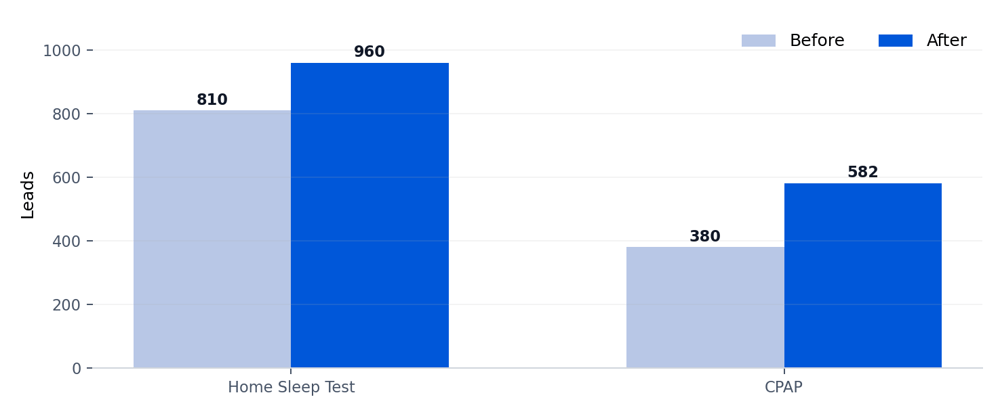
Figure 1. Lead volumes reported for Home Sleep Test and CPAP campaigns.
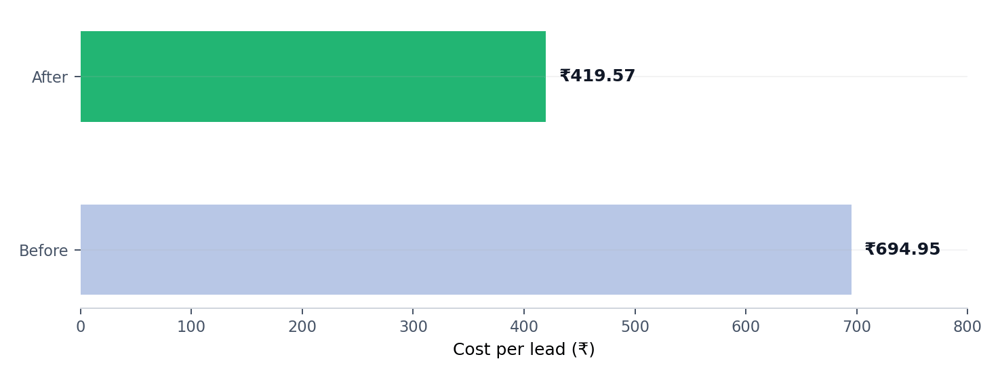
Figure 2. Home Sleep Test CPL reduced by approximately 39.6%.
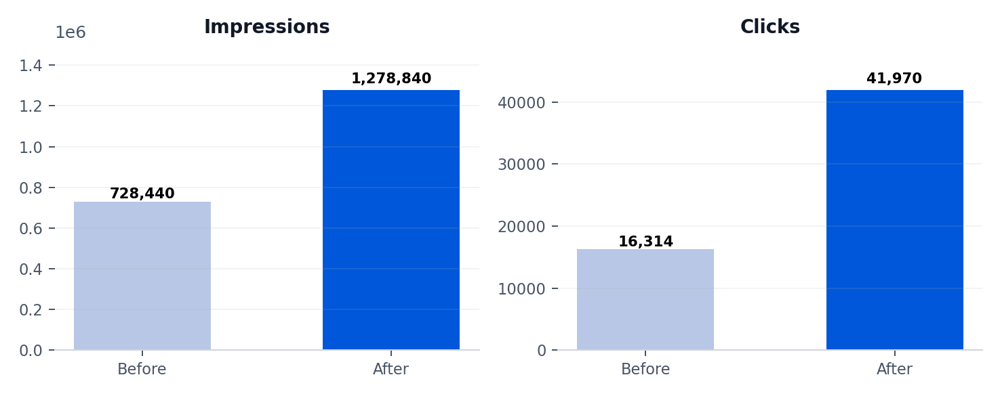
Figure 3. Reported campaign visibility and response increased over the comparison periods.
These outcomes show a campaign system that scaled reach and response while improving the efficiency of its most clearly reported lead program. CPAP campaigns also consistently met or exceeded monthly lead targets during the project, according to the submitted project record.
BUSINESS OUTCOME
ResMed generated more qualified enquiries within the available budget, while the Home Sleep Test campaign produced 150 additional leads and reduced CPL by ₹275.38.
8. How the team handled execution risks
| Issue | Mitigation | Operational impact |
|---|---|---|
| High CPC | Refined keywords, match types and negatives; shifted spend to proven demand | Protected lead flow and CPL |
| Tracking problems | Diagnosed tags and conversion signals across GTM, GA4, ad platforms and CRM | Restored optimization inputs and reporting confidence |
| Policy disapprovals | Monitored frequently and responded quickly | Minimized campaign interruption |
| Seasonality | Adjusted pacing, geography, bids, creative and budget | Maintained flexibility as demand changed |
| Lead-quality variation | Used sleep-coach feedback to judge genuine enquiries | Optimized toward business value, not form volume alone |
The project demonstrated that marginal improvements accumulate. Small but frequent changes to keywords, ad copy, targeting and budgets materially improved results over time. The strongest learning was organizational as much as technical: regular feedback from the people speaking with prospects made campaign data more actionable.
9. Long-term value created
A repeatable, full-funnel campaign architecture spanning high-intent search, commerce, awareness and remarketing.
A stronger keyword and negative-keyword foundation for future healthcare demand generation.
Clearer, convenience-led messaging that can be reused across ads and landing pages.
A measurement stack connecting GA4, GTM, Google Ads, Meta and HubSpot with CRM and commerce workflows.
A practical closed-loop process in which sleep-coach feedback informs campaign investment and lead-quality decisions.
Daily and monthly governance routines that support budget control, policy compliance and continuous improvement.
Because the program ran for nearly two years, the improvement did not depend on a single creative or short-term bidding change. It came from a durable operating model: measure accurately, review search intent, qualify business outcomes, reallocate investment and keep testing.
10. Project team and evidence note
| Role | Team member |
|---|---|
| Inboundsys project / account manager | Puja Damani |
| Performance marketing specialist | Kavitha S |
| Creative designer | Uday Kumar S |
| Landing-page developer | Aruna M |
| Submission verification | Manaswini Ramnath |