
Engagement at a glance
Client
SkillUp
Industry
Education Technology
Platform
Marketing + Sales Hub Professional
Duration
3-6 months
Status
Completed
Executive summary
Skill Up is a global EdTech company helping students, professionals, and organizations develop job-ready capabilities in emerging technologies. However, its legacy CRM was not capturing, organizing, or surfacing customer information effectively. Records were incomplete, lead follow-up lacked consistency, and reporting could not provide the confidence required for informed decisions.
Skill Up selected HubSpot to create a centralized operating platform. Inboundsys implemented Marketing Hub Professional and Sales Hub Professional for approximately 25 users across marketing, sales, finance, and leadership, covering architecture, configuration, automation, reporting, migration, custom development, testing, and go-live support.
The most technically demanding work was the migration of approximately 300,000 records from LeadSquared. Because LeadSquared and HubSpot use different schemas, objects, field conventions, and relationship models, the project could not be treated as a simple export-and-import exercise. Inboundsys transformed and remapped the data, recreated historical calls, notes, and activities, transferred attachments and custom-object information, and rebuilt the associations connecting contacts, companies, and deals.
Inboundsys also developed a React-based UI extension inside the HubSpot deal record, replacing free-text notes with a dynamic disposition form. Together, the migration, configuration, automation, reporting, and embedded UI created a single source of truth with clearer ownership, more dependable follow-up, and better visibility.
Client at a Glance
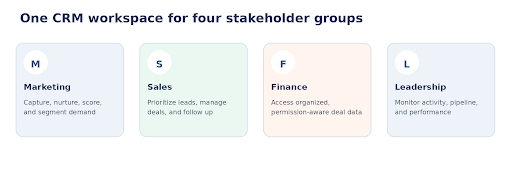
Figure 1. Marketing, sales, finance, and leadership work from one connected CRM foundation.
Skill Up delivers online training and career-development programs to individual learners, working professionals, and organizations. This creates a high-volume environment in which marketing engagement, lead qualification, sales follow-up, deal progression, and reporting must remain connected.
The HubSpot implementation therefore needed to do more than store contacts. It had to give four stakeholder groups a shared operational view while still supporting the different tasks they perform:
Marketing:
capture, nurture, score, and segment demand through forms, landing pages, emails, and automated journeys.
Sales:
receive and prioritize leads, manage deals, record outcomes, schedule follow-ups, and move opportunities through consistent stages.
Finance:
access relevant deal and customer information through an organized, permission-aware CRM structure.
Leadership:
monitor activity and performance through centralized dashboards and reports built on cleaner data.
The Business Challenge
Before the implementation, Skill Up did not have a sufficiently centralized or standardized CRM operation. The legacy system held valuable information, but the way data was captured and organized limited its usefulness. Teams could not easily rely on a unified view of every lead and interaction, and that affected daily execution as well as management visibility.
Four Connected Problems
| # | Challenge | Business Effect | Design Response |
|---|---|---|---|
| 01 | Fragmented data | Incomplete records and limited customer context | Centralized CRM model |
| 02 | Sales inconsistency | Variable dispositioning, ownership, and follow-up | Governed pipelines and statuses |
| 03 | Limited automation | Manual routing, tasks, updates, and nurturing | Connected workflow framework |
| 04 | Weak visibility | Reporting affected by missing or unstructured activity | Dashboards on cleaner data |
These issues reinforced one another. Skill Up needed a CRM foundation in which data, people, workflows, and reporting were designed together.
Project Objectives
The program was shaped around six practical outcomes:
Centralize customer, company, deal, activity, note, attachment, and custom-object data in HubSpot. Establish consistent lifecycle stages, lead statuses, pipelines, ownership rules, and follow-up practices. Improve lead management so opportunities are assigned, prioritized, progressed, and acted upon more reliably.
Automate marketing and sales activities without removing necessary human judgment from the process. Give users and leaders clearer, role-relevant views through record layouts, dashboards, and reports. Preserve operational history during the move from LeadSquared so teams could continue working without losing context.
Discovery and Solution Architecture
Inboundsys began with discovery workshops and process mapping. The team examined how leads entered the business, how they moved between marketing and sales, which stages and statuses were meaningful, which data fields drove decisions, and where existing manual steps or visibility gaps created friction.
This analysis informed HubSpot's data model, permissions, custom properties and objects, lifecycle definitions, pipelines, automation, reporting, and migration rules. These elements were designed together because migration fields influence workflows, lifecycle definitions affect scoring, and association decisions determine whether reporting reflects complete relationships.
The delivery sequence was deliberately controlled:
Discover and map:
document current processes, pain points, stakeholders, data sources, and desired outcomes.
Design the target model:
define HubSpot objects, properties, relationships, pipelines, lifecycle rules, and permissions.
Configure and build:
create the CRM structure, marketing assets, automations, reports, chat flows, and custom UI extension.
Transform and migrate:
cleanse, map, import, associate, and validate approximately 300,000 legacy records.
Test and accept:
complete technical testing and user acceptance testing before controlled go-live.
upport adoption:
provide training, go-live assistance, and post-launch support so teams could work confidently in the new environment.
Building the HubSpot Foundation
The implementation covered Marketing Hub Professional and Sales Hub Professional, with configuration designed for approximately 25 users. Users, teams, and permissions were structured to give each department appropriate access while keeping the CRM manageable.
Core CRM configuration
Custom properties and custom objects aligned HubSpot with Skill Up's business information and reporting needs.
Lifecycle stages and lead statuses created shared definitions for the customer journey and follow-up process.
Sales pipelines and deal stages provided a consistent path for opportunity management.
Record layouts and views gave users faster access to the information most relevant to their roles.
Forms and landing pages connected lead capture directly with the CRM instead of creating disconnected data trails.
Chatflows and live chat supported timely digital engagement and a smoother path from enquiry to action.
Marketing and sales enablement
Marketing emails, nurturing, scoring, and workflows created a coordinated engagement model. Leads could be routed to the right owner, tasks generated when action was required, follow-up dates recorded, and deal progression connected to consistent next steps. The CRM became an operational workspace rather than a passive database.
Complex Migration from LeadSquared
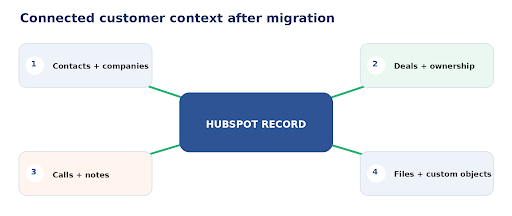
Figure 2. The migration preserved connected customer context rather than moving isolated rows.
Approximately 300,000 records had to move from LeadSquared into HubSpot across contacts, companies, deals, activities, notes, attachments, and custom objects. A direct lift-and-drop would not work because the systems use different schemas and relationship conventions. Without transformation, the import could create duplicates, disconnected activities, broken relationships, or misleading reports.
The migration method
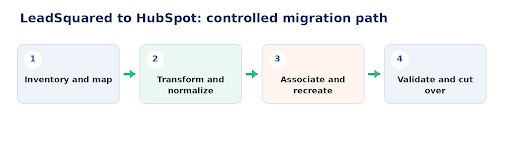
Figure 3. Transformation, relationship rebuilding, and validation protected historical context.
Inventory:
identify source objects, fields, formats, record volumes, dependencies, attachments, and historical activities.
Map:
connect each LeadSquared field and object to its correct HubSpot destination, including custom properties and objects where required.
Transform:
normalize values, adapt formats, reconcile field conventions, and prepare data for HubSpot's model.
Associate:
rebuild the links between contacts, companies, deals, activities, notes, and other related records.
Recreate history:
preserve calls, notes, activities, attachments, and engagement context instead of moving only current master records.
Validate:
test counts, required fields, samples, associations, ownership, history, and downstream reporting before final cutover.
Search and content
Technical SEO, content, keywords, competitors, backlinks, local and international SEO
Search and content
Technical SEO, content, keywords, competitors, backlinks, local and international SEO
Preserving historical context was especially important. A contact record without its earlier calls, notes, deal activity, and associated company would have forced representatives to restart discovery or work with incomplete information. By recreating those engagements and relationships, Inboundsys ensured that existing leads remained actionable and that users could continue conversations with the context they needed.
Custom Deal Disposition UI Extension
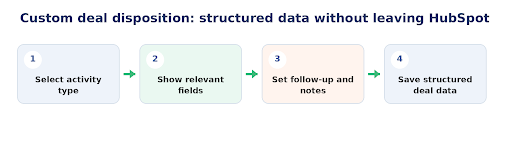
Figure 4. The extension turns free-text activity notes into consistent, reportable deal data.
One of the most distinctive components was a custom UI extension embedded directly within the HubSpot deal record. Previously, representatives could record outcomes in free-text notes, making the information difficult to standardize, compare, automate, or report on.
The new interface guides a representative through a structured workflow:
The representative selects an activity type, such as L2 Fallout, from a dropdown.
The extension dynamically displays a second set of fields relevant to that selection, such as an outcome dropdown.
The representative chooses a follow-up date and time and enters supporting notes where necessary.
On submission, the structured information is saved directly against the deal without requiring the user to leave the record view.
Built with React, Node.js, and HubSpot APIs, the extension balances usability with data governance. Users receive a shorter, context-aware form instead of a long generic checklist. Skill Up receives more consistent activity data that can support segmentation, workflow logic, quality control, and reporting. It is a practical example of custom development solving a process problem inside the CRM rather than adding another disconnected application.
Automation and Reporting Framework
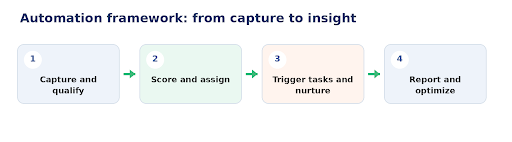
Figure 5. HubSpot automation connects lead capture, prioritization, follow-up, and management insight.
The implementation used workflows to make key processes repeatable while keeping the logic visible within HubSpot. Automations included:
Lead assignment based on defined business rules.
Lifecycle-stage updates as leads progress through the customer journey.
Task creation so required actions are less likely to be overlooked.
Internal notifications that alert the right people when intervention is needed.
Deal-stage automation to coordinate activities around pipeline movement.
Lead nurturing to maintain relevant engagement over time.
Lead scoring to help teams identify and prioritize stronger opportunities.
Technical SEO, content, keywords, competitors, backlinks, local and international SEO
Dashboards and reports were configured on top of the new data structure. This is a critical distinction: attractive dashboards cannot compensate for weak data foundations. Because migration, field definitions, processes, and activity capture were addressed first, reporting could provide a clearer view of marketing and sales activity, lead movement, follow-up, and pipeline status.
Testing, Go-Live, and Adoption
The delivery included testing, user acceptance testing, training, go-live support, and post-launch assistance. Records, associations, automations, and the custom extension were checked against real working scenarios. Clear mapping rules and iterative validation helped coordinate stakeholders and reduced the risk of transferring legacy inconsistencies into HubSpot.
The Biggest Challenge - and How It Was Solved
The central challenge was preserving usable customer history while translating a complex LeadSquared model into HubSpot. Inboundsys treated contacts, activities, deals, notes, attachments, custom objects, and associations as connected components rather than attempting one bulk import. Historical engagements were recreated, relationships rebuilt, and results checked before go-live, allowing Skill Up to transition without sacrificing sales history or customer context.
Business Results
| Outcome Area | Verified Operational Improvement |
|---|---|
| Data | Contacts, companies, deals, activities, notes, attachments, and custom objects centralized |
| Process | Lifecycle, lead status, pipelines, ownership, follow-up, and activity capture standardized |
| Efficiency | Assignment, tasks, notifications, stage actions, nurturing, and scoring automated |
| Visibility | Sales and marketing activity brought into dashboards and reports on a stronger data foundation |
| Continuity | Historical engagements and record relationships preserved for ongoing follow-up |
MEASUREMENT NOTE
The questionnaire did not provide numerical before-and-after performance metrics, so the outcomes are presented without invented conversion, productivity, or revenue claims. The verified implementation scope and reported operational improvements are substantial:
Approximately 300,000 records migrated from LeadSquared into HubSpot.
Marketing Hub Professional and Sales Hub Professional implemented for approximately 25 users.
Marketing, sales, finance, and leadership brought into a shared CRM environment.
Customer data centralized across contacts, companies, deals, activities, notes, attachments, and custom objects.
Manual effort reduced through assignment, task, notification, lifecycle, deal-stage, nurturing, and scoring workflows.
Data accuracy and sales visibility improved through structured fields, restored associations, consistent activity capture, and centralized reporting.
Lead management strengthened so interactions and follow-up actions could be tracked more reliably, and opportunities were less likely to be missed.
The principal business outcome was complete visibility across sales and marketing activity. Teams could track interactions and leads more consistently, work from preserved historical context, and use a clearer operating process. This improved follow-up discipline and provided leadership with a stronger base for informed decisions and growth.
Long-Term Value
The project created value beyond the initial migration and go-live. Skill Up now has a CRM foundation that can be governed, expanded, and optimized as programs, campaigns, teams, and learner volumes change.
A durable data model:
custom properties, objects, and associations provide a structured home for business information.
Reusable automation:
workflows allow higher activity volumes to be managed without proportional administrative growth.
Better-quality inputs:
the custom disposition extension turns informal notes into structured operational data.
Connected reporting:
dashboards can evolve using shared definitions and more complete activity history.
Scalable alignment:
shared lifecycle stages, pipelines, permissions, and ownership rules help marketing, sales, finance, and leadership grow on a common foundation.
Technology Stack
HubSpot Marketing Hub Professional and Sales Hub Professional formed the platform, including CRM, workflows, dashboards, forms, landing pages, marketing email, scoring, and chatflows. React.js powered the embedded UI extension, while Node.js and REST APIs supported custom functionality and data operations. LeadSquared was the legacy migration source.
Why This Is a Strong Inboundsys Case Study
This engagement combines process design, data architecture, high-volume migration, HubSpot configuration, automation, reporting, custom development, and adoption support. The approximately 300,000 migrated records reflect scale, while preserved history and the custom UI extension demonstrate continuity - protecting the past and improving future CRM inputs.
Conclusion
By migrating approximately 300,000 records, recreating historical engagements, rebuilding associations, and embedding a dynamic deal-disposition interface, Inboundsys gave Skill Up better visibility, less manual work, more consistent follow-up, and a scalable HubSpot foundation for growth.
READY TO MODERNIZE YOUR CRM?
Is your legacy CRM limiting lead visibility, automation, or reporting? Inboundsys can help you design the target process, migrate complex historical data, configure HubSpot, build custom functionality, and support a controlled go live. Talk to Inboundsys about HubSpot onboarding, migration, and implementation.