
Executive summary
A mid-sized Indian manufacturer and supplier of dehumidification and humidity-control systems needed its website to perform as a dependable growth channel. The company serves residential, commercial and industrial buyers across manufacturing, pharmaceuticals, healthcare, hospitality, warehousing, food processing, offices and homes. Its product range was strong, but its digital visibility did not reflect the breadth or commercial relevance of the offering.
At the start of the engagement in April 2024, the website generated approximately 962 monthly organic users or sessions. SEO maturity was assessed as low, website-performance maturity as very low, and AI-search readiness as nonexistent. Crawlability and indexing gaps, weak metadata, inconsistent headings, limited internal linking, broken links, redirect chains, unoptimized images, missing schema and a weak authority profile restricted discoverability. The Shopify storefront also carried heavy images, render-blocking and fragmented CSS, unused JavaScript, and mobile-experience issues.
Inboundsys designed an ongoing, phased program that linked technical SEO, content relevance, structured data, authority development, AEO, GEO, analytics and website-performance improvements. High-impact technical barriers were addressed first. Priority product, category and service pages were then strengthened around high-intent commercial topics, while FAQ and answer-oriented formats made content easier for people, search engines and AI systems to interpret.
By July 2026, verified monthly organic traffic had risen to 22,511, impressions to 100,853, clicks to 1,795, CTR to 1.80%, and page views to 65,314. The site also recorded 355 ranking keywords, 40 top 10 keywords and 60 reported AI-search visibility or citation outcomes. These results transformed the website from a weakly optimized catalogue into a compounding visibility asset with a stronger foundation for qualified traffic, engagement and lead generation.
Client snapshot
| Dimension | Profile |
|---|---|
| Industry | Industrial equipment manufacturing; dehumidification and humidity control |
| Primary market | India |
| Company size | 51-200 employees |
| Business model | B2C, with enterprise, SMB and institutional buying audiences |
| Platform | Shopify |
| Engagement | Ongoing SEO, AEO, GEO and performance retainer |
| Measurement window | April 2024 to July 2026 |
The business challenge
The central problem was not product-market relevance; it was discoverability. Prospective customers searching for dehumidifiers, moisture control, indoor-air-quality solutions and application-specific equipment were not consistently reaching the company’s pages. Technical weaknesses reduced the ability of search engines to crawl and index important URLs, while thin or poorly structured page signals limited relevance for commercial queries
Organic reach and keyword rankings were too low for a competitive HVAC and humidity-control market.
Important pages lacked consistently optimized titles, descriptions, heading hierarchy, alt text and internal links.
Weak schema, semantic structure and entity signal limited eligibility for rich results, answers and AI-generated responses.
Large images, blocking CSS, unused code and poor mobile responsiveness weakened speed and user experience.
Historical data and baseline evidence were incomplete, making disciplined measurement especially important.
STRATEGIC OBJECTIVE
Build a technically healthy, semantically clear and performance-conscious website that could attract qualified organic visitors, win answer-oriented visibility and create sustainable lead-generation opportunities.
Discovery: building a reliable picture of the site
The engagement began with a broad discovery and audit phase rather than isolated keyword edits. Business discovery clarified audiences, commercial priorities and the applications most likely to influence purchase decisions. SEO, content, backlink, analytics, accessibility, AEO, GEO, CMS and performance reviews then established a single improvement backlog.
| Audit lens | What was examined | Why it mattered |
|---|---|---|
| Technical SEO | Crawlability, indexing, sitemaps, robots rules, canonicals, redirects, rendering and mobile SEO | Ensured priority pages could be discovered, understood and indexed. |
| Content & on-page | Keywords, competitors, titles, descriptions, headings, page depth, FAQs, images and internal links | Aligned pages with user intent and strengthened relevance. |
| Authority | Backlinks, competitor links, mentions, directories, reviews and local presence | Improved trust and off-site signals. |
| AEO & GEO | Question formats, snippets, PAA, entity clarity, AI-platform visibility and citations | Prepared content for answer engines and generative search. |
| Experience & speed | PageSpeed, Core Web Vitals, images, CSS, JavaScript, accessibility and responsiveness | Reduced friction for users and crawlers. |
| Measurement | GA4, Search Console, Tag Manager and Bing Webmaster Tools | Created a repeatable performance feedback loop. |
The toolset included Google Search Console, GA4, Google PageSpeed Insights, Screaming Frog, SEMrush, Moz, Google Keyword Planner, Bing Webmaster Tools and GTmetrix. Together, these sources revealed crawl and indexing gaps, metadata inconsistencies, weak internal linking, opportunities on high-intent pages, limited structured data, oversized imagery and front-end inefficiencies.
The integrated growth strategy
Inboundsys organized the work as a sequence of reinforcing layers. This avoided the common mistake of publishing more content on top of an unhealthy technical foundation. Each layer increased the value of the next: crawlability supported indexing; clearer pages supported rankings; structured answers supported snippets and AI retrieval; faster delivery protected the user experience; and analytics guided prioritization.
| Phase | Focus | Representative actions |
|---|---|---|
| 1. Repair | Technical access and site health | Fix crawl errors, indexing controls, XML sitemap, robots.txt, canonicals, broken links, chains, URL structure and migration risks. |
| 2. Relevance | Commercial page optimization | Research intent; improve product, category and service pages; rewrite metadata; strengthen headings, images, content and internal links. |
| 3. Understanding | Schema and semantic structure | Add organization, service, product and answer-supporting schema; clarify entities, facts and relationships. |
| 4. Authority | Off-site trust and local signals | Analyze backlinks, conduct outreach, strengthen brand mentions, directories, reviews and Google Business Profile. |
| 5. Experience | Shopify performance and mobile usability | Compress and convert images, add responsive delivery and dimensions, prioritize hero media, minify CSS and reduce blocking. |
| 6. Learn | Monitoring and continuous improvement | Track impressions, clicks, CTR, rankings, engagement and conversion signals; refine priorities through reporting. |
Technical SEO: removing barriers to growth
Technical SEO produced the greatest foundational value because it enabled important pages to be crawled, indexed and evaluated more reliably. The team improved XML sitemap quality and robots directives, reviewed canonicalization, mapped redirects, repaired broken links and redirect chains, refined URL structure, assessed JavaScript rendering, supported mobile SEO and planned around migration risk. Log-file analysis and ongoing crawls helped identify where search-engine access did not match business priorities.
These fixes were paired with structured data and Core Web Vitals support. The intention was not simply to reduce an audit error count; it was to create a dependable delivery system for product and service information. Once technical obstacles were reduced, optimization on high-value pages had a stronger chance to translate into visibility.
On-page SEO and content architecture
Keyword research and competitor analysis identified commercial themes around dehumidifiers, humidity control and indoor air quality. Priority pages were optimized with clearer titles, more persuasive descriptions, logical headings, descriptive image alt text and expanded content. Product and category pages received particular attention because they connected search demand directly to the company’s solutions.
Internal linking was redesigned to help visitors move between problems, applications, product categories and supporting resources. Topic clusters, pillar-style organization, blog planning, content consolidation and FAQ sections created clearer relationships among subjects. This improved page authority flow while giving users more direct routes to relevant products and information.
AEO: designing content to answer real questions
Answer Engine Optimization extended the content program beyond conventional keyword placement. The team researched question-based queries and shaped material for featured snippets, People Also Ask results, conversational searches and voice-oriented discovery. FAQ pages, product pages and blog articles were the principal answer surfaces.
Use concise definitions and short-answer summaries near the top of relevant sections.
Frame headings around the questions buyers naturally ask about humidity, sizing, applications and product selection.
Support the direct answer with structured detail, practical context and internally linked next steps.
Use how-to formatting and structured headings where a process or decision sequence is involved.
Add suitable schema markup so machines can identify the page, organization, service and answer structure.
This approach improved readability as well as machine interpretation. Instead of forcing visitors to extract an answer from a long sales page, the content offered an immediate response and then expanded into evidence, options and product relevance.
GEO: making the brand legible to generative search
Generative Engine Optimization addressed visibility in Google AI experiences and Gemini, ChatGPT, Perplexity and Claude. Because AI systems rely on clear entities, relationships, corroboration and retrievable facts, the work focused on brand-entity clarification, semantic content architecture, author and expert credibility, structured facts and definitions, organization and service schema, topic authority, brand mentions and third-party authority.
AI-friendly summaries were added where they could accurately represent the page, and query testing helped assess whether platforms could understand the company’s services and connect them with relevant use cases. The engagement reported 60 AI-search visibility or citation outcomes by the end of the measurement period. Because no equivalent baseline was supplied, this figure is presented as an achieved level, not a calculated uplift.
GEO PRINCIPLE
Visibility in generative search is not a separate content trick. It grows from consistent entities, useful first-party information, structured facts, credible mentions and technically accessible pages.
Website performance: protecting discovery with experience
Performance work focused on large hero media, oversized images throughout the storefront, missing image dimensions, render-blocking and fragmented CSS, unused CSS and unused JavaScript. The team compressed images, converted suitable assets to WebP, implemented responsive images and lazy loading, prioritized hero imagery, defined image width and height attributes, minified CSS and enabled server compression.
Changes were introduced carefully so that core storefront functionality and the user journey remained intact. Following optimization, the submitted Lighthouse/PageSpeed scores were 50 on mobile and 78 on desktop. The source did not provide comparable baseline scores or field-level LCP, INP and CLS values, so the case study does not claim a score increase or a confirmed Core Web Vitals pass. This transparent treatment keeps the performance story factual while documenting the work completed.
Measurement and governance
GA4, Google Tag Manager and Google Search Console formed the central measurement layer. Reporting monitored organic users or sessions, impressions, clicks, CTR, keyword performance and engagement. Bing Webmaster Tools and SEO platforms supplemented the view. Regular reviews converted performance data into decisions: which pages required technical attention, which topics were gaining traction, where CTR lagged visibility and which answer or AI-search queries warranted refinement.
The ongoing-retainer model was important. Search growth in a competitive category depended on repeated audit, implementation, validation and iteration rather than a one-time checklist. It also helped compensate for poor historical data by establishing a more reliable forward-looking evidence base.
Verified results
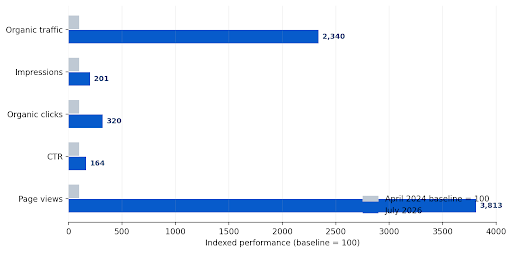
Figure 1. Indexed comparison allows metrics with different units to be viewed together. Baseline = 100.
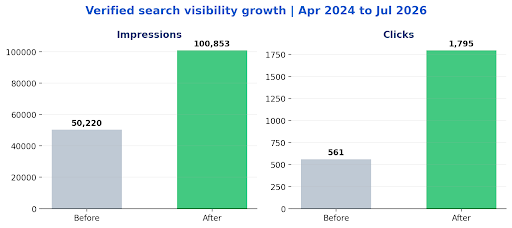
Figure 2. Actual impression and click volumes supplied for the measurement period.
Additional achieved levels
| Indicator | Reported outcome | Interpretation |
|---|---|---|
| Ranking keywords | 355 | The supplied form contained an after value only; no growth rate is inferred. |
| Top 10 keywords | 40 | Demonstrates first-page visibility across a meaningful set of queries. |
| AI-search visibility / citations | 60 | Reported achieved level; no pre-engagement baseline was provided. |
| Lighthouse / PageSpeed | Mobile 50; Desktop 78 | After scores only; presented without an uplift or CWV-pass claim. |
Business impact
The most important outcome was a substantial increase in discoverability. More impressions expanded the number of search opportunities; improved CTR converted a larger share of those opportunities into visits; and the increase in page views suggests that visitors explored more of the website’s content and product offering. Together, these gains created many more opportunities for qualified buyers to encounter the brand and progress toward an enquiry or purchase decision.
The project also produced durable operational value. Technical repairs, better page templates, stronger content structure, schema, internal linking and measurement standards are reusable across future products and campaigns. AEO and GEO practices prepared the content system for search experiences that synthesize answers rather than display only traditional links. Performance improvements reduced avoidable delivery friction and established a clearer optimization backlog for continued mobile and Core Web Vitals work.
COMMERCIAL INTERPRETATION
The supplied dataset verifies visibility, traffic and engagement growth. It does not include organic-lead, conversion-rate, revenue or pipeline baselines, so the case study describes increased lead opportunity without assigning unverified revenue impact.
Challenges and how they were managed
| Challenge | Inboundsys response |
|---|---|
| Competitive search landscape | Prioritized high-intent product and category opportunities, then supported them with technical health, content depth and authority signals. |
| Poor historical data and no reliable baseline | Established GA4, Tag Manager and Search Console governance; reported only figures supported by the submission. |
| Large site and content-migration risk | Used crawl-led prioritization, redirect planning, canonical and sitemap controls, and phased implementation. |
| Technical changes on a live Shopify site | Optimized images and front-end delivery while protecting storefront functionality and user experience. |
| No existing AEO or GEO capability | Introduced answer formats, semantic structure, entity clarity, schema, credibility signals and AI-query testing. |
Why the approach worked
Foundation before scale: crawlability and indexing were improved before relying on more content.
Commercial prioritization: high-value product and category pages connected optimization effort with buyer demand.
One information architecture: SEO, AEO and GEO were treated as related ways of helping systems and people understand the same facts.
Experience as part of visibility: performance and mobile improvements supported engagement rather than being handled as a separate engineering exercise.
Continuous evidence loop: reporting informed ongoing prioritization and made progress measurable over a long engagement.
Technical SEO, content, keywords, competitors, backlinks, local and international SEO
Key lessons for manufacturers
Manufacturing websites often contain technically detailed products, multiple applications and different buyer types. That complexity is an advantage only when information is organized so that buyers and machines can interpret it. Clear category structures, application-led pathways, concise answers, structured facts and strong internal links allow one knowledge base to serve conventional search, AI-generated answers and human decision-making.
The case also shows why responsible measurement matters. Strong outcomes do not require filling every blank with an estimate. Separating verified before-and-after metrics from after-only indicators makes the story more credible and creates a sharper roadmap: improve lead and revenue attribution, capture field Core Web Vitals, establish platform-specific AI baselines and continue converting increased visibility into measurable commercial outcomes.
Next-phase recommendations
| Priority | Recommended next step | Expected value |
|---|---|---|
| 1 | Define organic enquiry, call, form and commerce conversions in GA4 and connect them to CRM outcomes. | Quantifies lead quality, pipeline and revenue contribution. |
| 2 | Capture CrUX / Search Console field data for LCP, INP and CLS by template. | Moves performance reporting from lab scores to real-user evidence. |
| 3 | Build an AI-visibility baseline by platform, prompt set, citation and landing page. | Makes GEO improvement measurable rather than anecdotal. |
| 4 | Expand expert-led application guides, comparison content, FAQs and first-party data. | Strengthens authority, answer eligibility and buyer confidence. |
| 5 | Continue technical crawls, internal-link reviews and asset-performance governance. | Protects gains as the Shopify site grows. |
Conclusion
This engagement demonstrates how a manufacturer can turn a low-maturity website into a stronger, more visible digital growth platform. Inboundsys combined technical SEO, commercial content optimization, structured data, AEO, GEO, authority development, Shopify performance work and continuous analytics in a phased program. The result was verified growth from 962 to 22,511 monthly organic users or sessions, from 50,220 to 100,853 impressions, from 561 to 1,795 clicks, from 1.10% to 1.80% CTR, and from 1,713 to 65,314 page views.
More importantly, the project established a sustainable operating model. Search engines can access and understand the site more effectively; buyers can find clearer answers and navigate relevant products; generative platforms have stronger facts and entity signals to retrieve; and the client has a measurement framework for continuous improvement. That combination creates the long-term foundation required to turn visibility into qualified demand.